
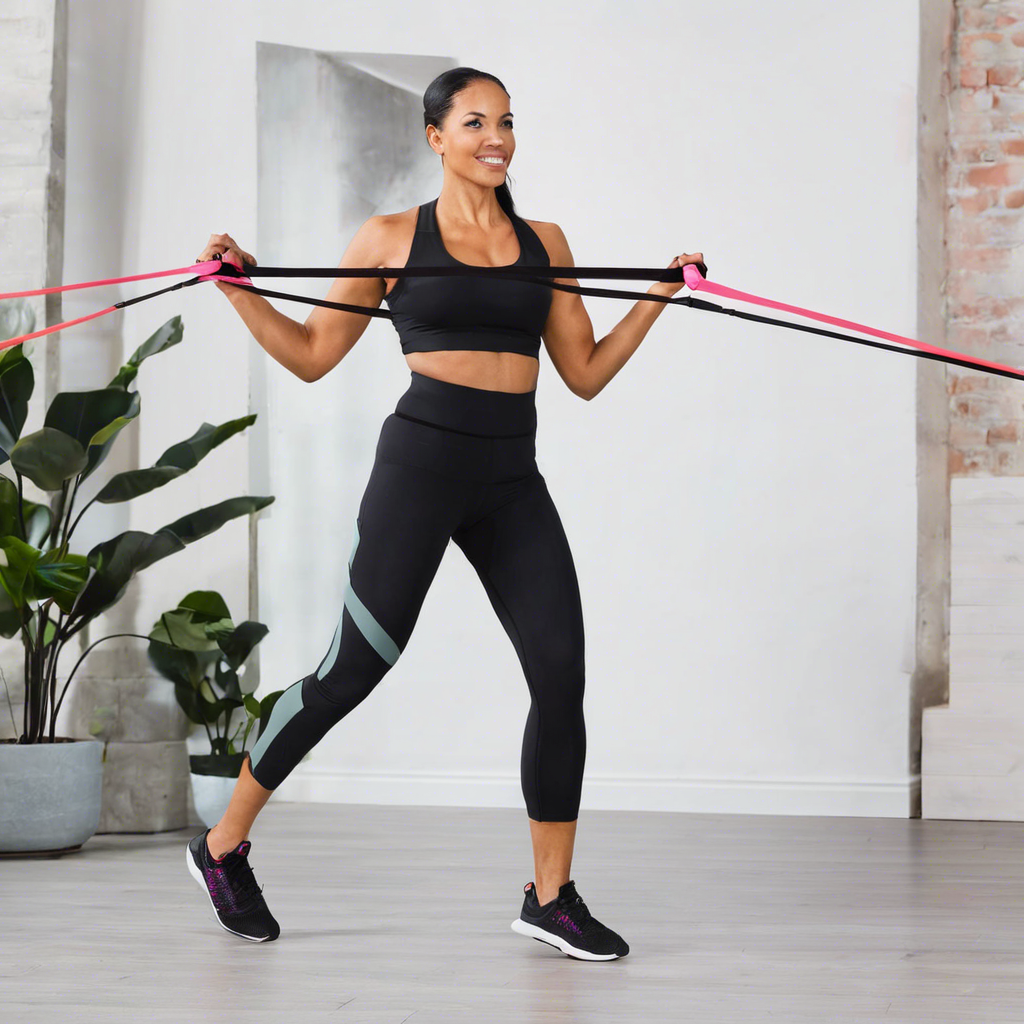
Resistance bands are a versatile and affordable tool that can be used for a comprehensive full-body workout. Whether you are new to fitness or an experienced athlete, resistance bands offer a unique way to increase the intensity of your exercises while improving strength, mobility, and flexibility. In this article, we will explore how to use resistance bands for a full-body workout, the benefits they provide, and some effective exercises to try.
What Are Resistance Bands?
Resistance bands are elastic bands made from materials like rubber, designed to provide resistance during exercises. They come in various lengths, thicknesses, and resistance levels, typically categorized as light, medium, heavy, and extra heavy. The level of resistance is determined by the band’s thickness and how stretched it becomes during use. Because of their compact nature, resistance bands are an excellent tool for those working out at home or looking to add variety to their regular gym routines.
Unlike free weights or machines, resistance bands create constant tension throughout the entire range of motion. This helps activate stabilizer muscles and improves functional strength. Additionally, resistance bands are low-impact, making them suitable for people with joint issues or those recovering from injuries.
Benefits of Using Resistance Bands
Before jumping into specific exercises, let’s take a look at the benefits of incorporating resistance bands into your fitness routine:
-
Versatility: Resistance bands can be used for a variety of exercises targeting different muscle groups. Whether you’re focusing on your upper body, lower body, or core, resistance bands can effectively activate muscles across the entire body.
-
Improved Strength and Endurance: Resistance bands provide variable resistance, meaning the further you stretch them, the harder they work. This continuous resistance helps improve both muscular strength and endurance over time.
-
Enhanced Flexibility: The flexibility of resistance bands allows you to work on your range of motion and increase joint mobility, which is essential for maintaining flexibility and preventing injury.
-
Portability: Resistance bands are lightweight and easy to transport, making them ideal for working out at home, on vacation, or even at the office. They also take up very little space, so you don’t need a dedicated workout area.
-
Reduced Risk of Injury: Resistance bands allow you to perform exercises that are less likely to lead to injury compared to traditional weights. Their lower impact makes them suitable for all fitness levels, including beginners and seniors.
-
Cost-Effective: Unlike expensive gym equipment, resistance bands are an affordable investment. A single set of resistance bands can provide years of full-body workouts without the need for additional equipment.
Full-Body Resistance Band Workout
Now that we know the benefits, let’s dive into a full-body workout using resistance bands. This workout will target all the major muscle groups and is designed to improve strength, flexibility, and endurance.
1. Squats with Resistance Band
Squats are a great way to target the lower body, particularly the glutes, quads, and hamstrings. Adding a resistance band increases the challenge and forces your muscles to work harder.
How to Do It:
-
Stand with your feet shoulder-width apart and place a resistance band just above your knees.
-
Lower your body into a squat position by pushing your hips back and bending your knees.
-
Ensure that your knees do not go beyond your toes as you squat.
-
Push through your heels to return to a standing position.
-
Perform 3 sets of 12-15 reps.
2. Resistance Band Deadlifts
Deadlifts are fantastic for strengthening the posterior chain, including your hamstrings, glutes, and lower back. Using a resistance band adds more tension to the exercise, which can improve your muscle-building potential.
How to Do It:
-
Stand with your feet hip-width apart, placing the resistance band under your feet.
-
Hold each end of the band in your hands and stand tall with a slight bend in your knees.
-
Hinge at your hips and lower your torso while keeping a straight back.
-
Reach the band towards the ground, then return to the standing position by pushing your hips forward.
-
Perform 3 sets of 12-15 reps.
3. Chest Press with Resistance Band
This exercise targets your chest, shoulders, and triceps, mimicking the motion of a bench press but with the added resistance from the band.
How to Do It:
-
Secure the resistance band to a door anchor or a sturdy object behind you.
-
Hold both ends of the band in your hands and position your arms so that your elbows are bent at 90 degrees and your hands are level with your chest.
-
Step forward slightly to create tension in the band.
-
Push your hands forward, extending your arms fully and squeezing your chest.
-
Slowly return to the starting position.
-
Perform 3 sets of 12-15 reps.
4. Lat Pulldown with Resistance Band
The lat pulldown exercise is essential for working the upper back, particularly the lats. Resistance bands are great for mimicking the traditional machine pulldown.
How to Do It:
-
Secure the resistance band overhead (using a door anchor or bar).
-
Grab both ends of the band with your palms facing forward.
-
Kneel down to create tension in the band.
-
Pull the band down towards your chest, squeezing your shoulder blades together.
-
Slowly release back to the starting position.
-
Perform 3 sets of 12-15 reps.
5. Lateral Band Walks
Lateral walks target the glutes and hips, particularly the gluteus medius, which is crucial for hip stability.
How to Do It:
-
Place a resistance band just above your knees or around your ankles.
-
Squat down slightly, keeping your chest upright.
-
Step sideways with one foot, then follow with the other foot, maintaining tension on the band throughout the movement.
-
Continue stepping side-to-side for 30 seconds to a minute.
-
Perform 3 sets of 30 seconds per direction.
6. Resistance Band Rows
Rows are effective for strengthening the upper back, biceps, and shoulders. They are crucial for building posture and upper body strength.
How to Do It:
-
Secure the resistance band to a low point, such as the bottom of a door or a low anchor.
-
Hold the ends of the band in each hand, and step back to create tension.
-
With your arms extended, pull the band towards your torso, squeezing your shoulder blades together.
-
Slowly return to the starting position.
-
Perform 3 sets of 12-15 reps.
7. Standing Resistance Band Core Twist
This exercise targets the obliques, helping to tone the sides of your abdomen and improve rotational strength.
How to Do It:
-
Attach the resistance band to a low anchor point on one side of your body.
-
Hold the band with both hands, arms extended in front of you.
-
Stand with your feet shoulder-width apart and rotate your torso away from the anchor point while keeping your arms straight.
-
Slowly return to the starting position.
-
Perform 3 sets of 12-15 reps on each side.
8. Resistance Band Glute Bridge
This exercise focuses on the glutes and hamstrings. It’s particularly effective for targeting the lower body and improving posture.
How to Do It:
-
Lie on your back with your knees bent and feet flat on the ground.
-
Place a resistance band just above your knees and push your knees outward to create tension.
-
Lift your hips towards the ceiling, squeezing your glutes at the top.
-
Lower your hips back down slowly.
-
Perform 3 sets of 15-20 reps.
9. Bicep Curls with Resistance Band
This classic exercise works the biceps and helps build upper arm strength.
How to Do It:
-
Stand with your feet shoulder-width apart and place the resistance band under your feet.
-
Hold each end of the band with your hands, palms facing forward.
-
Curl your hands towards your shoulders, keeping your elbows close to your body.
-
Slowly lower your hands back to the starting position.
-
Perform 3 sets of 12-15 reps.
10. Triceps Extension with Resistance Band
This exercise targets the triceps, helping to tone the back of your arms.
How to Do It:
-
Secure the resistance band overhead (using a door anchor or high bar).
-
Hold the ends of the band with both hands and extend your arms fully.
-
Bend your elbows to lower your hands behind your head, keeping your upper arms still.
-
Extend your arms back to the starting position, engaging your triceps.
-
Perform 3 sets of 12-15 reps.
Conclusion
Incorporating resistance bands into your workout routine is a fantastic way to build strength, improve flexibility, and boost endurance. With their versatility, portability, and ability to target all muscle groups, resistance bands offer a low–cost, effective alternative to